
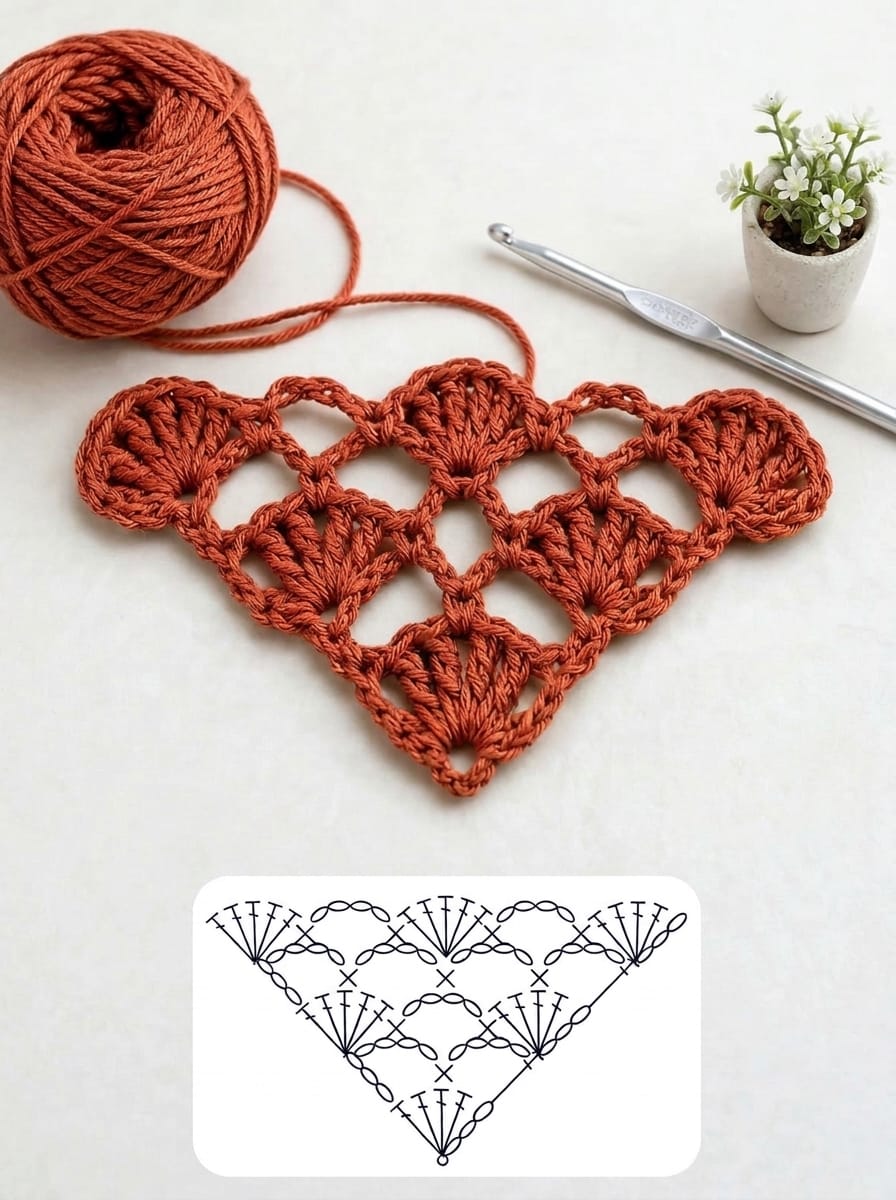
Looking for a beautiful and easy crochet pattern to add a handmade touch to your next project? This crochet shell stitch triangle pattern is a lovely design featuring delicate shell stitches, airy chain spaces, and a charming triangular shape. The combination of textured stitches and open spaces creates an elegant lace effect that looks beautiful in soft sage green yarn.
Whether you’re a beginner learning decorative crochet stitches or an experienced crocheter looking for a relaxing project, this shell stitch pattern is a wonderful technique to try. You can use it to make decorative motifs, lightweight shawls, scarves, crochet accessories, and other creative handmade projects.
In this tutorial, you’ll learn which materials to use, how to crochet the basic shell stitches, and how to build the triangular pattern row by row.
What Is a Crochet Shell Stitch Triangle?
A crochet shell stitch triangle is a decorative crochet design created by working several tall stitches into the same stitch or chain space. These stitches fan outward, forming a shell-like shape.
In this particular design, the shells are connected with chain spaces and smaller joining stitches. The result is a beautiful openwork pattern with a repeating arrangement of shells that gradually forms a triangle.
The open spaces give the fabric a lightweight appearance, while the shell clusters add texture and visual interest. Using a single color, such as sage green, helps highlight the stitch definition and makes the finished piece look clean and elegant.
Materials You’ll Need
Before starting your crochet shell stitch triangle, gather the following materials:
- Yarn: Lightweight cotton yarn or DK-weight yarn in your favorite color.
- Crochet hook: A hook that matches your yarn label; a 3.5 mm to 4.5 mm hook is a reasonable starting point.
- Scissors: For cutting the yarn.
- Tapestry needle: For weaving in loose ends.
- Stitch markers: Optional, but useful for keeping track of pattern sections.
For a look similar to the photo, choose sage green cotton yarn with good stitch definition. Cotton yarn is especially suitable for decorative motifs because it helps the shell stitches and chain spaces stand out.
Crochet Abbreviations
This tutorial uses US crochet terminology.
- ch: Chain
- sl st: Slip stitch
- sc: Single crochet
- dc: Double crochet
- sp: Space
- sk: Skip
- st(s): Stitch(es)
- shell: A group of double crochet stitches worked into the same stitch or space
Shell stitch used in this tutorial: 5 double crochet stitches worked into the same space.
Note: The photo includes a stitch chart, but it does not provide a written gauge or complete row-by-row stitch counts. The instructions below are a practical guide to recreating a similar design, rather than a verified transcription of the original pattern.
How to Crochet the Shell Stitch Triangle
Step 1: Make the Starting Loop
Begin with a slip knot and create a small starting chain or adjustable loop, depending on how you prefer to begin the bottom point.
For a simple practice swatch, chain 4 and join with a slip stitch to form a ring. Chain 3 to begin the first shell section.
Step 2: Crochet the First Shell
Work 5 double crochet stitches into the starting ring or designated chain space. These stitches form the first fan-shaped shell.
Keep your stitches relaxed and consistent. If the shell feels too tight, try loosening your tension slightly or using a larger hook.
Step 3: Create Chain Spaces
After completing the shell, make a short chain to create an open space. Chain spaces separate the shell clusters and give the design its airy, lace-like appearance.
The number of chains can vary depending on how open you want the finished fabric to look.
Step 4: Work the Next Shell Clusters
Continue by placing additional shell stitches into the appropriate chain spaces. Separate the shells with chain spaces and use small joining stitches where the pattern connects.
Follow the arrangement shown in the photo: the upper section contains several shell fans connected by open arches, while the lower sections gradually converge toward the bottom point.
Step 5: Build the Triangle Shape
To create a triangular motif, arrange the shell clusters in progressively narrower rows.
As you work each new row, place the shells into the chain spaces or joining points of the previous row. Keep the center aligned so that the design develops symmetrically.
Check your work after every row to make sure the shell clusters are evenly spaced on both sides.
Step 6: Finish the Bottom Point
Continue working the shell clusters and connecting chain spaces until the motif reaches the desired size.
Finish at the bottom point according to your chosen construction method. Fasten off, cut the yarn, and leave a short tail.
Use a tapestry needle to weave in the loose ends carefully without pulling the openwork out of shape.
Tips for a Beautiful Crochet Shell Stitch Pattern
1. Choose yarn with good stitch definition. Smooth cotton yarn makes it easier to see each double crochet and chain space.
2. Keep your tension consistent. Even tension helps the shells look balanced and keeps the triangle from curling.
3. Count your shell clusters. Check each row before moving on to avoid accidentally adding or missing a shell.
4. Use stitch markers when needed. Marking the center and outer edges can help you maintain the triangular shape.
5. Block your finished motif. Gently wet-block the piece according to the yarn’s care instructions. Pin it into shape and allow it to dry completely. Blocking can make the chain spaces more even and the shell stitches more defined.
Creative Ways to Use This Crochet Triangle
Once you master the shell stitch, you can adapt the technique for many handmade projects.
- Crochet shawls: Repeat and enlarge the motif to create a lightweight lace shawl.
- Scarves and wraps: Use soft yarn to make an elegant accessory for spring or autumn.
- Decorative bunting: Crochet smaller triangles in different colors and join them into a garland.
- Clothing details: Use the shell pattern as a decorative edging or insert, provided the construction and sizing are adjusted.
- Handmade gifts: Create coordinated crochet accessories for friends and family.
- Home décor: Incorporate the motif into decorative panels or other creative textile projects.
The openwork design is especially attractive in natural shades such as sage green, cream, beige, dusty pink, and soft blue.
Common Crochet Shell Stitch Mistakes
Why Does My Crochet Triangle Curl?
Curling can happen when the stitches are too tight or the motif does not have enough chain spaces. Check your tension and make sure the shell clusters are placed correctly.
Why Do My Shells Look Uneven?
Uneven shells often result from inconsistent stitch height or accidentally working a different number of stitches into a space. Count each shell carefully and keep your yarn tension steady.
Why Does My Triangle Look Asymmetrical?
The triangle may become uneven if the shell clusters are not balanced on both sides. Count the clusters in every row and use the center point as a guide.
Can Beginners Make This Pattern?
Yes! Beginners who already know how to make chains, slip stitches, and double crochet stitches can practice this design. Start with a small swatch before attempting a larger shawl or accessory.
Frequently Asked Questions
What is the best yarn for a crochet shell stitch triangle?
Cotton yarn is a great choice for a defined, structured motif. Soft acrylic or a cotton blend can also work well, particularly for shawls and scarves.
Is the crochet shell stitch suitable for beginners?
Yes. The basic shell stitch is beginner-friendly once you understand double crochet. The main challenge is placing the shells and chain spaces consistently.
How do I make the crochet triangle larger?
Repeat the pattern’s established increases and shell arrangement to expand the motif. Because the exact original stitch counts are not provided, test the construction on a small swatch before increasing the size.
Can I use this pattern to make a shawl?
Yes. You can adapt the shell stitch technique into a larger triangular shawl by repeating the motif or expanding the rows. You may need to adjust the stitch counts, yarn quantity, and hook size for your desired measurements.
What crochet hook size should I use?
Start by checking your yarn label. A 3.5 mm to 4.5 mm hook is a useful starting range for many lightweight or DK yarns, but the best size depends on your yarn and preferred fabric.
Final Thoughts
This beautiful crochet shell stitch triangle is a lovely way to explore lace crochet and create a delicate handmade design. Its fan-shaped shells, open chain spaces, and triangular arrangement give it a timeless look that works well for accessories, decorative motifs, and larger crochet projects.
Choose your favorite yarn color, take your time with each shell, and enjoy watching the pattern develop stitch by stitch. Once you become comfortable with the technique, experiment with different yarn weights and colors to create your own unique variations.
Save this crochet tutorial for later and share it with a friend who loves handmade projects!