
Spring Pasta Primavera is the epitome of freshness, bursting with seasonal veggies that capture the essence of spring. Each time I crafted this dish, I learned something new—like how a touch of tarragon elevates the dish’s flavor. It’s a delightful way to enjoy vibrant produce, and I invite you to check out my Winter Salad recipe as a perfect companion for your meals.
About Spring Pasta Primavera
This dish is a celebration of seasonal vegetables tossed with pasta—a classic that’s both straightforward and incredibly satisfying. I tested various combinations of veggies over several nights, and each time, the colors and aromas transformed my kitchen. Whether it’s a busy weeknight dinner or a gathering with friends, this recipe guarantees smiles around the table. Plus, it’s easy on the budget; you can utilize whatever local produce you find.
- Quick and easy to prepare, making it perfect for weeknight dinners.
- Budget-friendly using seasonal veggies that can be easily swapped for availability.
- Popular among family members, even picky eaters love the colorful presentation.
- A great opportunity to introduce fresh herbs for added depth and flavor.
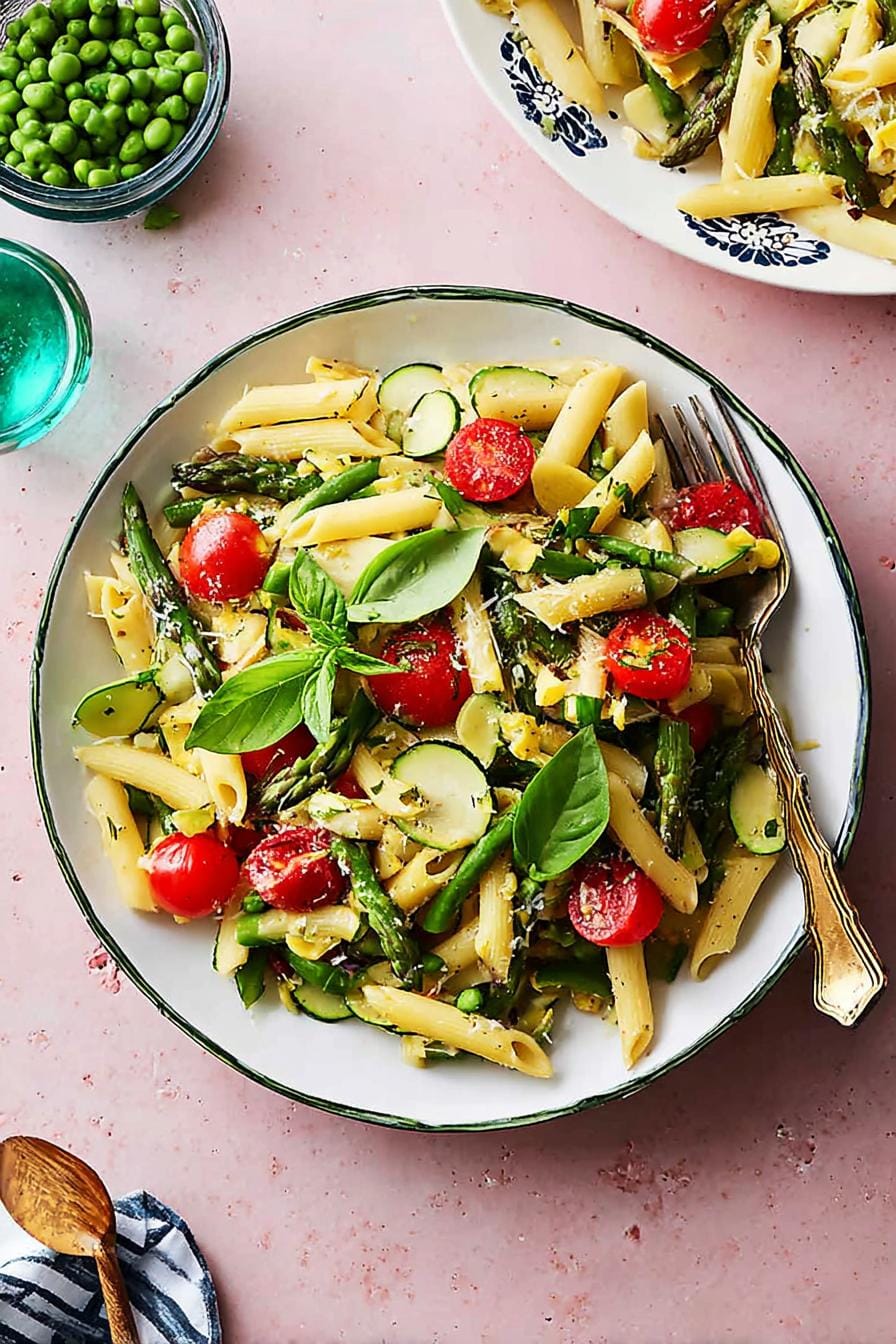
Key Ingredients & Their Roles
- Penne Pasta: acts as the base, providing sturdy twirls that hold onto the sauce and veggies.
- Fresh Vegetables: yellow squash, zucchini, asparagus, and cherry tomatoes add vibrant color and crunch.
- Garlic: infuses aroma and flavor, creating a savory backdrop for the dish.
- Pecorino Cheese: lends creaminess and a salty kick, enhancing every bite.
How to Make Spring Pasta Primavera
- Bring a large pot of salted water to a boil, then cook the penne pasta according to package directions until al dente. Drain and drizzle with a touch of olive oil to prevent sticking.
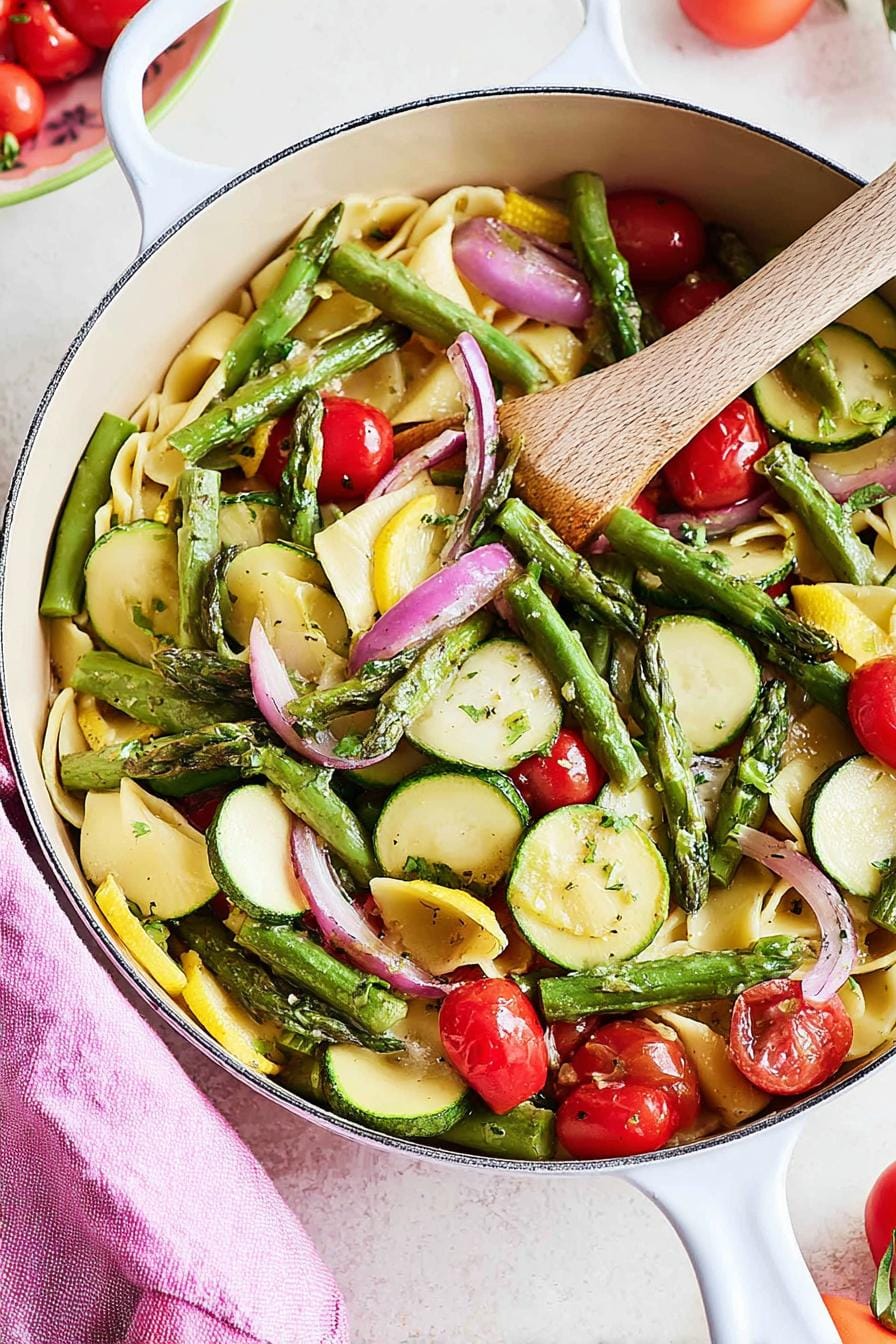
- In a deep skillet over medium heat, warm the olive oil, then add the sliced garlic. Cook until fragrant, about 1 minute, before stirring in the squash, zucchini, asparagus, cherry tomatoes, red onion, sea salt, and several grinds of black pepper. Sauté for 3 to 4 minutes, until the veggies soften and colors brighten.
- Mix in the cooked pasta, thawed peas, grated Pecorino, lemon juice, and a sprinkle of red pepper flakes. Toss everything together until combined.
- Stir in fresh basil leaves and tarragon, if using, ensuring an even distribution. Serve warm, garnished with more basil and a drizzle of olive oil.
Pro Tips & Troubleshooting
- During my tests, I found that sautéing garlic for just a moment before adding vegetables keeps it from burning, enhancing rather than overpowering the dish.
- A common mistake is overcooking the pasta; make sure to follow package directions and test for that perfect al dente bite!
- Feel free to swap seasonal vegetables—like bell peppers for zucchini—based on what’s freshest in your market.
- This recipe can easily be doubled for gatherings, as it adapts well to larger portions without losing its charm.
Storage & Make-Ahead Guide
Store any leftovers in an airtight container in the fridge for up to 3 days. You can also freeze portions for up to 2 months. When reheating, use a skillet with a splash of olive oil to bring back that fresh flavor. On one occasion, I stored it for a few days, and it still retained its vibrant color and delightful crunch!
Serving Suggestions
Pair Spring Pasta Primavera with a light arugula salad dressed with lemon vinaigrette, or serve alongside some crusty garlic bread for a filling meal. For more ideas, check out my Japanese Clear Soup and Buttery Biscuits.
Frequently Asked Questions
- What type of pasta works best for Pasta Primavera? Penne or rotini are excellent choices as they hold the sauce well.
- Can I add protein to this dish? Absolutely! Grilled chicken or shrimp blends nicely with the veggies.
- How can I make this recipe vegan? Swap cheese for nutritional yeast and use a plant-based pasta.
- Is this dish good for meal prep? Yes, it stores well and can be easily reheated.
- What herbs pair well with Pasta Primavera? Fresh basil and tarragon enhance the spring flavors beautifully.
Final Thoughts
I truly relish enjoying Spring Pasta Primavera on warm evenings when fresh produce is at its peak. The colors and flavors dance in harmony, making it a favorite in my household. I encourage you to give this recipe a swirl, adjust ingredients according to taste, and share your results with me!
More Recipes You’ll Love
- Creamy Vegetable Soup – a fresh vegetable medley that complements the flavors in primavera.
- Pasta Primavera – a classic dish featuring the same vibrant veggies.
- Garlic Parmesan Chicken Pasta – rich flavors that pair well with a light primavera dish.
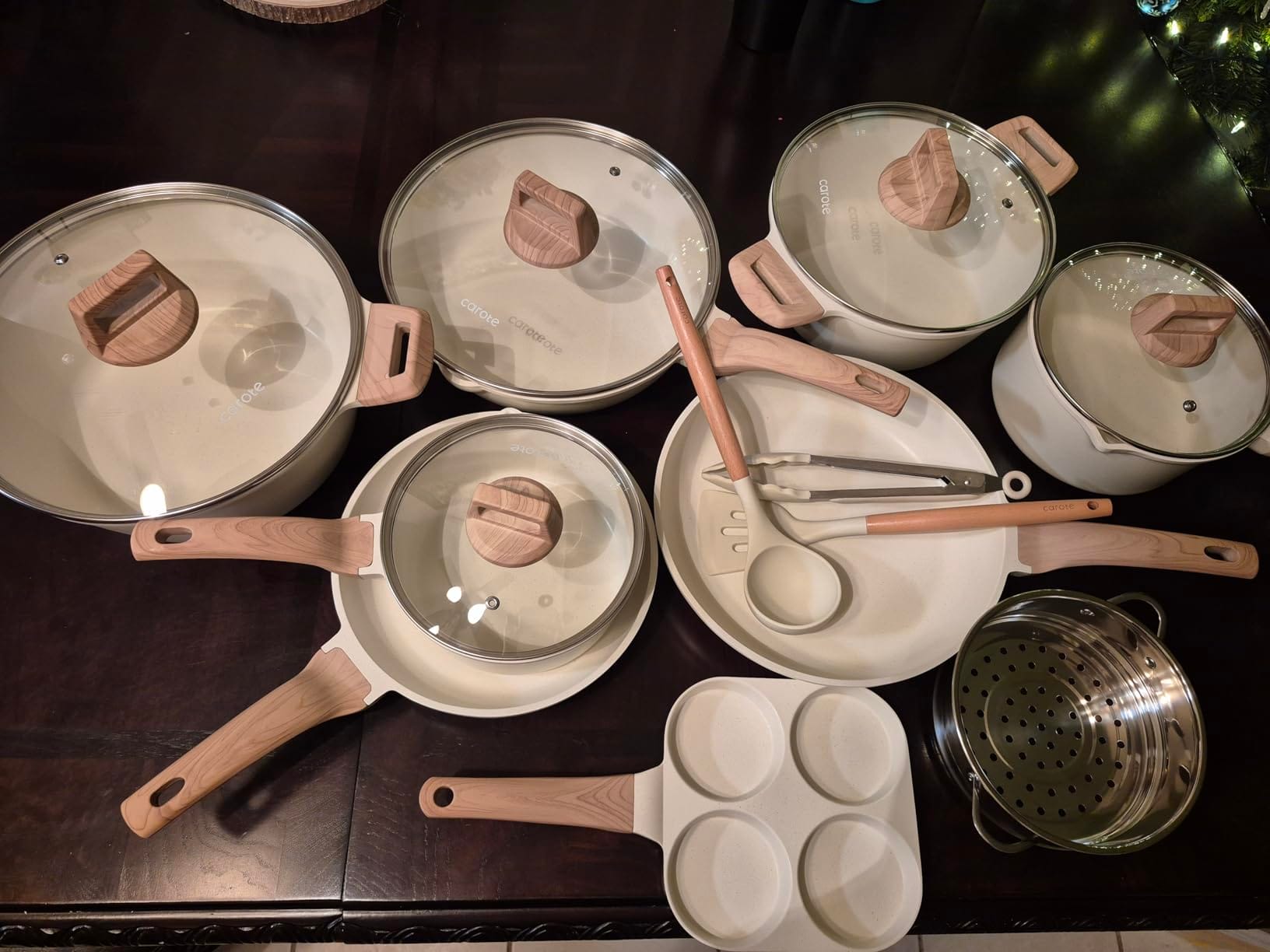
I’ve been using the CAROTE 44-piece cookware set for my recipes, and it’s been amazing. The nonstick coating works beautifully, heats evenly on induction, and cleans up fast. The elegant design, sturdy handles, and included knives make it a complete, reliable kitchen upgrade.
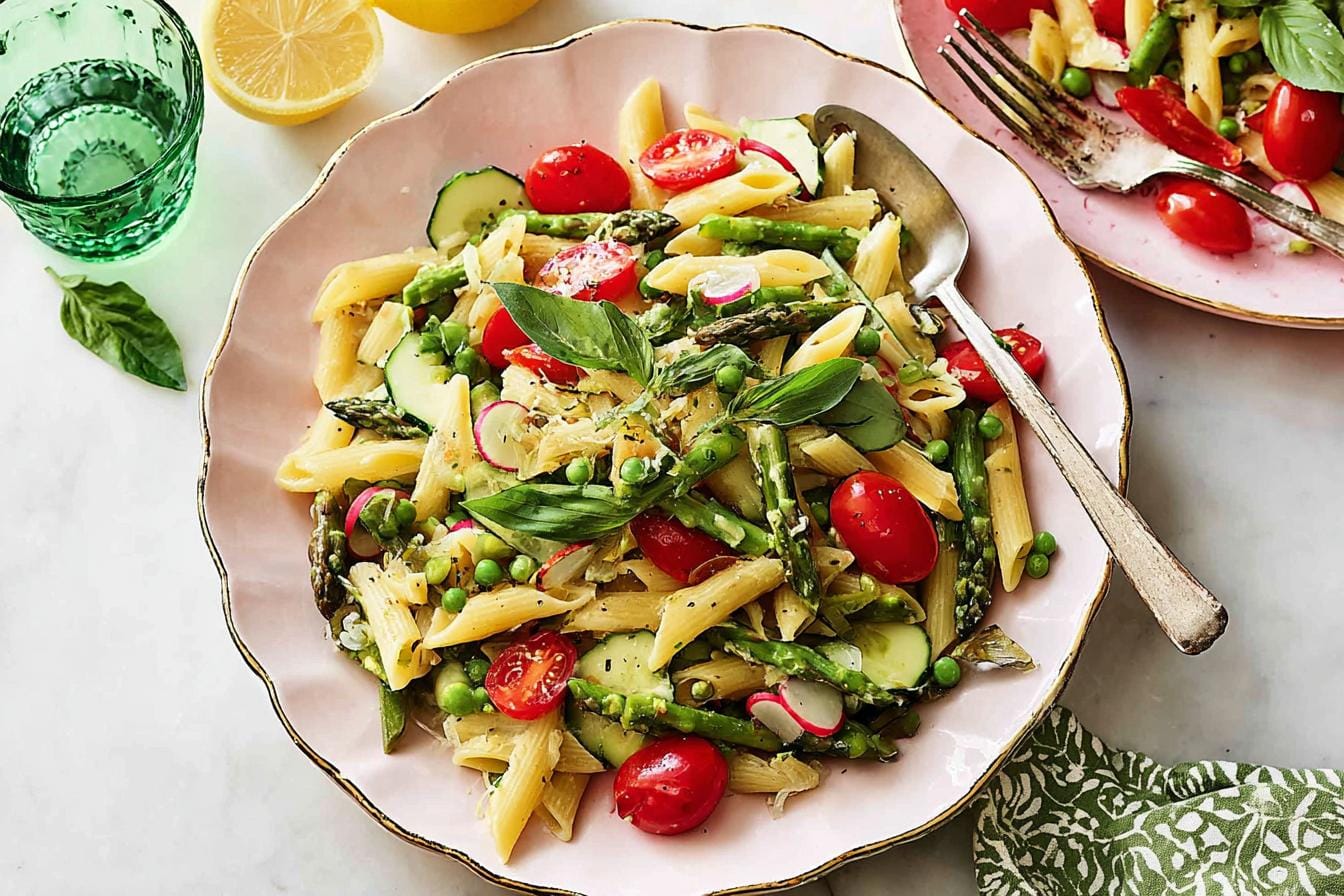
Pasta Primavera
Ingredients
- 10 ounces penne pasta
- 2 tablespoons extra-virgin olive oil plus more for drizzling
- 4 cloves garlic sliced
- 1 yellow squash sliced into thin half-moons
- 1 zucchini sliced into thin half-moons
- 1 bunch asparagus chopped into 1-inch pieces
- 1 cup cherry tomatoes halved
- 1 cup red onion thinly sliced
- 1 teaspoon sea salt
- 1/2 cup frozen peas thawed
- 3/4 cup pecorino cheese grated
- 3 tablespoons fresh lemon juice
- red pepper flakes
- 1 cup fresh basil leaves plus more for garnish
- 1/4 cup fresh tarragon optional
- freshly ground black pepper
Instructions
- Bring a large pot of salted water to a boil. Prepare the pasta according to the package instructions, cooking until al dente. Drain and toss with a drizzle of olive oil to prevent sticking.
- Heat the oil in a large, deep skillet over medium heat. Add the garlic, squash, zucchini, asparagus, tomatoes, onion, salt, and several grinds of pepper and sauté for 3 to 4 minutes, or until the vegetables are tender.
- Add the pasta, peas, cheese, lemon juice, and a pinch of red pepper flakes and toss to combine. Stir in the basil and tarragon, if using.
- Season to taste, garnish with more basil, and serve.